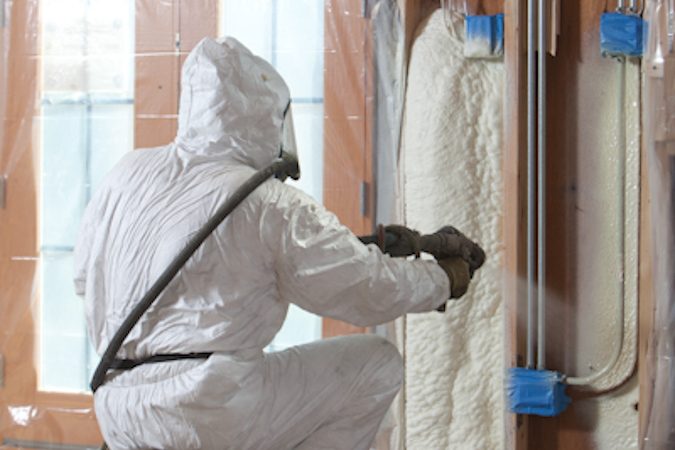
Spray Foam in Prairieville
Tell us a little about your home or building and we'll call you back to talk it through.
In Prairieville, the air conditioner never really gets a season off. The heat leans on your house from April to October, the humidity never leaves, and the attic turns into an oven that sits right on top of the rooms you're trying to cool. Spray foam insulation closes the gaps that let all of that inside — so your AC can finally keep up instead of fighting a losing battle all summer.
Spray foam is insulation that's applied as a liquid and expands to fill the cavity it's sprayed into — every crack, seam, and odd corner that batts and blown-in insulation leave open. That matters because most Louisiana houses don't just lose cool air through thin insulation; they lose it through air leaks. Hot, humid outside air pushes in through the attic, the top plates, the rim joists, the gaps around pipes and wiring, and your AC has to cool and dry all of it, all day long. Foam seals those paths closed and insulates in the same pass. The result is a house that holds its temperature, feels less sticky, and works its air conditioner a lot less hard.
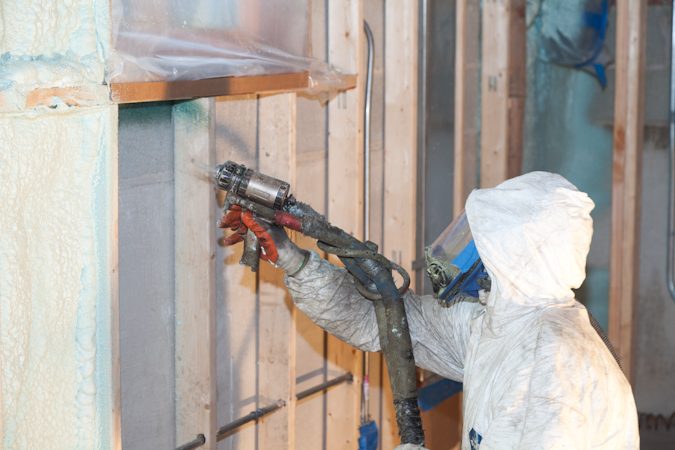
There are two kinds of spray foam, and the right one depends on where it's going. Closed-cell foam cures dense and rigid, resists moisture, and delivers more insulating power per inch — typically in the R-6 to R-7 per inch range. In our climate, it's usually the answer where humidity and moisture are part of the problem. Open-cell foam is softer, expands more, and costs less for the same cavity — typically around R-3.5 to R-3.8 per inch — and it's an excellent air-sealer and sound-dampener in the right walls and ceilings. Most homes end up with one or the other, and some use both in different places. We'll walk the house with you and tell you plainly which goes where and why.
Closed-cell spray foam · Open-cell spray foam · Attic spray foam
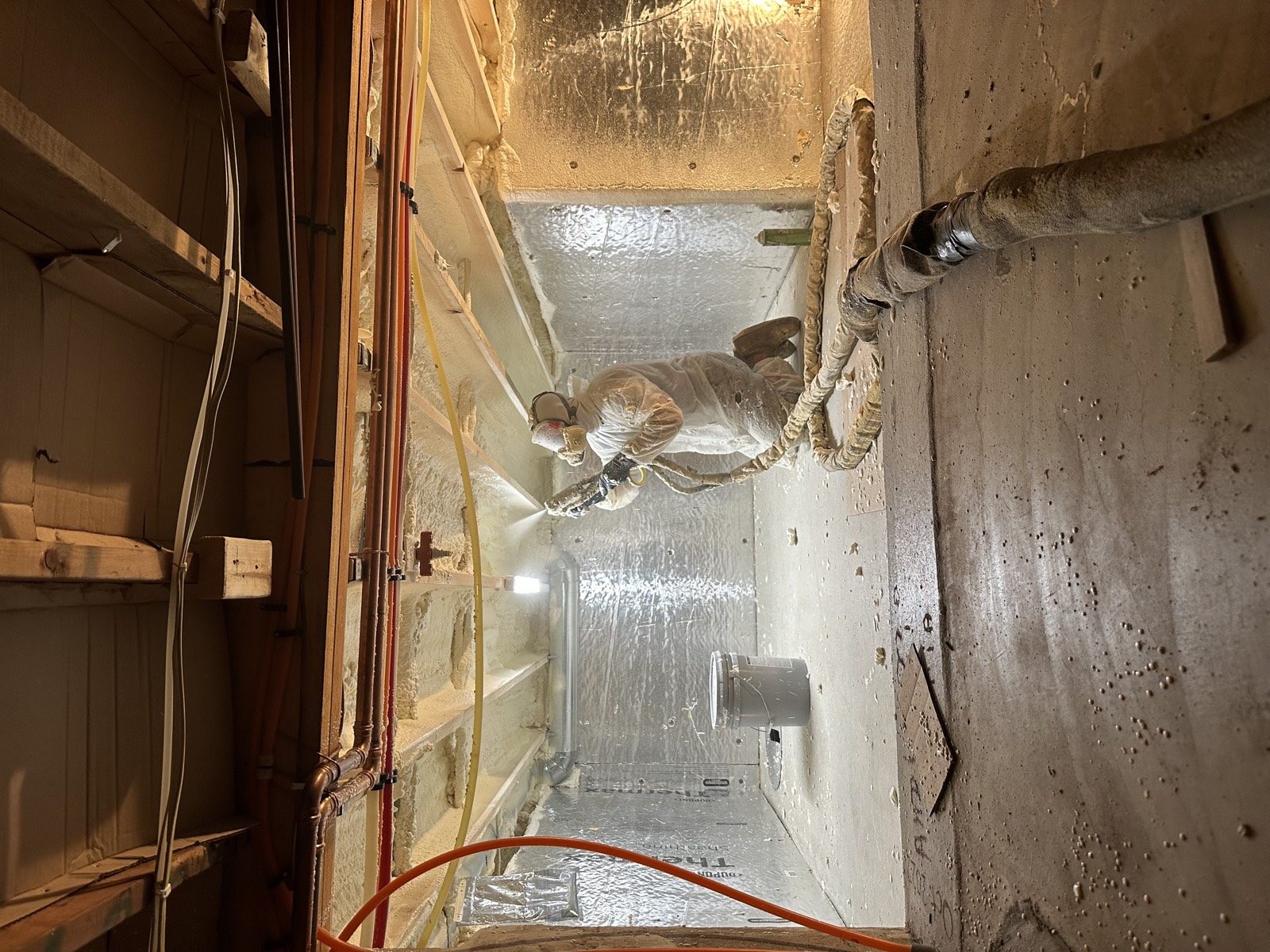
On a 95-degree afternoon, an unsealed Louisiana attic can push well past 120 degrees — and for most houses around here, that's exactly where the AC ducts live. Your system is pumping cold air through the hottest room on the property. Foaming the attic, whether at the roof deck or the attic floor, is often the single biggest comfort move a homeowner in Prairieville can make. The upstairs bedrooms stop baking, the AC cycles instead of running flat-out, and the whole house settles down. Our attic spray foam page covers how that works in detail.
Honestly: it depends on the house, and anyone who quotes you a real number before seeing it is guessing. Price moves with the square footage, the foam type, how thick it needs to go, and how easy the space is to work in — an open new-construction wall and a tight existing attic are very different jobs. What we can promise is a straight number after a real look. Fill out the form, we'll call you back, walk the house, and give you a quote based on what's actually there.
Short version: closed-cell is the dense, moisture-resistant foam, and it usually wins wherever Louisiana humidity is part of the problem — roof decks, crawl spaces, rim joists, metal buildings. Open-cell is softer and cheaper per inch, and it's a terrific air-sealer and sound-blocker in walls and cavities that aren't fighting moisture head-on. Plenty of houses use both. We'll tell you which goes where when we see the house — and if the cheaper foam is the right call somewhere, we'll say so.
It should, and here's the honest version of why. Most of what your AC fights all summer is hot, humid air leaking in — through the attic, the top plates, the gaps around everything that penetrates a wall. Foam seals those leaks and insulates in the same pass, so the system runs less to hold the same temperature. How much less depends on your house, your old insulation, and your thermostat habits, so we won't promise a percentage. Homeowners typically notice the AC cycling off more and the upstairs feeling livable before they ever open a bill.
For most houses around here, the attic is the single best place to spend insulation money, full stop. An unsealed attic can run past 120 degrees on a summer afternoon, and odds are your ductwork — maybe your whole air handler — is sitting in that heat. Sealing the roof deck brings the attic close to house temperature, which protects the equipment and takes constant pressure off every upstairs room. If you only fix one thing, this is usually the thing.
Both. New construction is the easy case — walls open, everything accessible. But a huge share of our work is existing homes, mostly attics, where we can get to the roof deck or the attic floor without touching your drywall. Finished walls are the limiting case, since the cavity has to be reachable; that's a house-by-house answer we can give you after a look.
During spraying and for a period afterward, yes — stay out while the foam is applied and while it cures and the space airs out. The crew sets up ventilation and will give you the exact timeline for your job before anyone sprays, since it depends on the product and the space. For a typical attic job, you're looking at a short disruption, not a week in a hotel. You'll know the plan before the rig is ever turned on.
A tight house is the goal — it's what stops the heat and humidity — but you're right that a sealed house needs a ventilation plan, and fresh air should come in on purpose instead of through leaks. That's part of the assessment, not an afterthought: we look at your house and your HVAC setup and make sure the whole system works together. Done right, a foamed house feels fresher than a leaky one, because the air coming in is air you chose.
Yes, and please let us — an uninsulated metal building in Louisiana is a condensation machine in winter and an oven by May. Closed-cell foam is the standard answer: it bonds directly to the metal, stops the sweating, and knocks the interior temperature down to where the space is actually usable year-round. We foam shops, barns, and outbuildings all over Prairieville, Gonzales, St. George, LA, Dutchtown, Geismar, Sorrento, St. Amant, Donaldsonville, and the rest of Ascension Parish.
Fill out the form on the contact page — that's the whole first step. Submitting it is a request, not a commitment: someone calls you back, asks a few questions about the house, and sets up a time to come look if you want to go that far. Quotes come after the visit. No pressure at any point, and no obligation until you've seen the number and said yes.
It starts with the form on this page. Tell us where the house is and what's bothering you — a hot room, a high bill, a muggy feel, a new build, a metal shop. Submitting the form is a request, not a commitment: someone calls you back, asks a few questions, and sets up a time to look at the house. Same trucks, same crews cover Prairieville, Gonzales, St. George, LA, Dutchtown, Geismar, Sorrento, St. Amant, Donaldsonville, and the rest of Ascension Parish.